Ten O'Clock Tulsi: A Practical Case for Replacing the Second Coffee

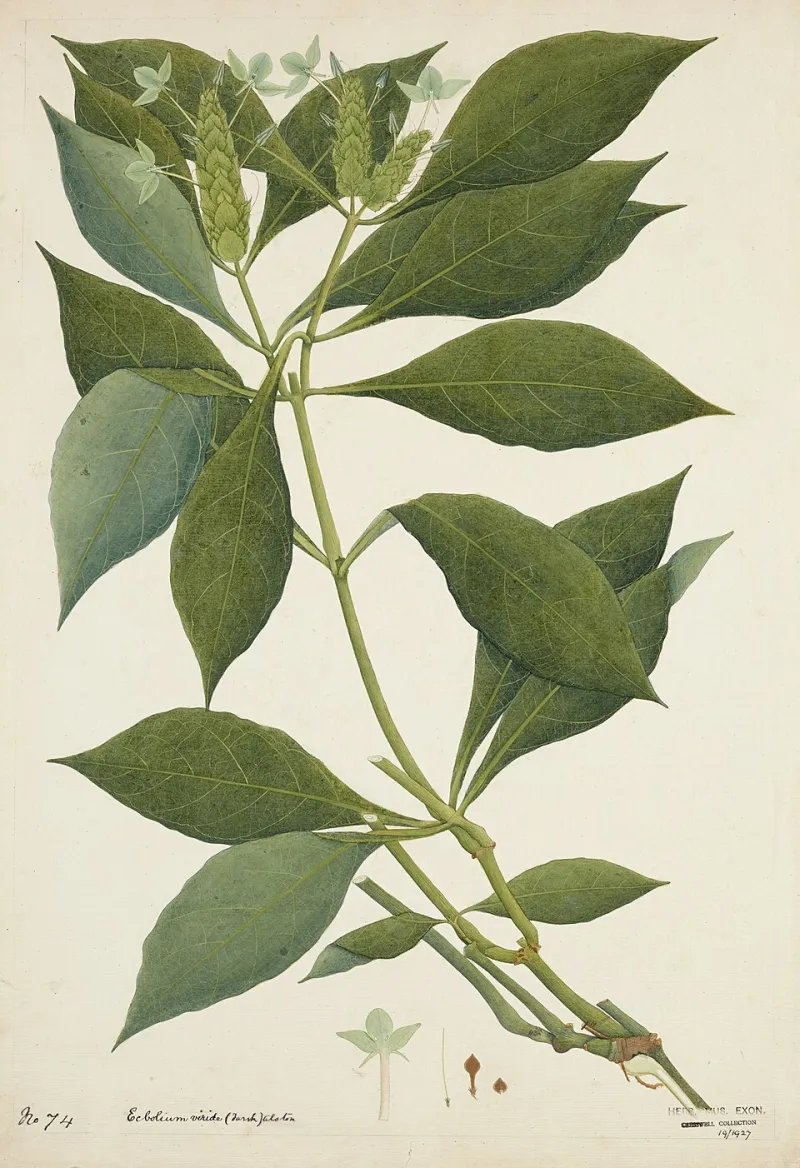
Photo: Theodor Pixis, Public domain, via Wikimedia Commons
The second coffee is the least examined habit in British office life. The first one is deliberate. The second arrives around ten, unbidden, often because a meeting ended early or a spreadsheet has become unbearable. It is drunk quickly, it does not taste of much, and by half past two it has usually turned into a low-grade headache and a vague sense of having been cheated.
I am not going to argue that tulsi will transform your productivity. I am going to argue that the ten o'clock cup is a slot worth redesigning, that tulsi is a reasonable thing to put in it, and that you can test the claim on yourself in a week.
Why the second cup is the problem
Caffeine blocks adenosine receptors rather than removing fatigue. It has a half-life of roughly five hours in most adults, longer in some, which means a cup at ten is still measurably present at three and can still be nudging sleep onset at ten in the evening. NHS guidance puts 400 mg a day as the general ceiling for adults, and pregnant women are advised to stay under 200 mg. A large filter coffee can carry 150 mg or more.
So the issue is rarely the first cup. It is the cumulative stack, and the timing of the last one. If your sleep has quietly deteriorated over a year and you cannot name a cause, the ten o'clock cup is a legitimate suspect.
What tulsi actually is
Tulsi — Ocimum tenuiflorum, holy basil — is a basil cultivar with a long ceremonial and medicinal history in India, and it is now widely stocked in the UK as a loose-leaf tea. Its chemistry includes eugenol, rosmarinic acid and ursolic acid. Different chemotypes vary in proportion, which is one reason two brands can taste and behave quite differently.
It contains no caffeine. That is its single most reliable property, and it is worth stating plainly, because a great deal of adaptogen marketing skates over the fact that the most dependable benefit of a tulsi habit is the stimulant you are no longer drinking at that hour.
The evidence, without the gloss
Tulsi is often described as an adaptogen. In practice, the human literature consists of small randomised trials, typically with thirty to a hundred participants over four to eight weeks, measuring self-reported stress, sleep quality and occasionally cognitive performance. Some show modest improvements; blinding is difficult because the taste is unmistakable, and results have not been robustly replicated in large UK or European cohorts.
Two honest conclusions follow. First, the safety profile in these trials looks unremarkable. Second, the effect sizes are small enough that anyone promising a transformation is overselling. If you want a caffeine-free, pleasant, inexpensive drink with a plausible but unproven calming effect, tulsi qualifies. If you want a replacement for sleep, it does not.
Tea or capsule?
- Tea. One to two grams of dried leaf per cup, steeped covered for five to ten minutes to retain the volatile oils. The dose is variable and lower than a standardised extract, but the ritual is the point: ten minutes, a kettle, a small deliberate pause.
- Standardised extract. Usually 100 to 500 mg, standardised to ursolic acid or eugenol. Consistent dosing and no taste, but also no ritual, and considerably more expensive per day.
My view: if you are testing the ten o'clock swap, use tea. You are trialling a change of habit as much as a herb, and the habit is the part with the plausible mechanism.
The seven-day trial
Keep your first coffee if you have one. Change nothing else — same bedtime, same meals, same exercise. At ten, brew tulsi and step away from the desk for the duration.
| Day | Action | What to log |
|---|---|---|
| 1 | Normal coffee, no tulsi. Baseline day. | Energy at 10:30, 12:00, 15:00 (1–5); jitter score (0–3); sleep quality next morning |
| 2 | Tulsi at 10:00, no second coffee | Same three energy scores |
| 3 | Tulsi at 10:00, drunk away from your desk | As above, plus a note on mood |
| 4 | Tulsi at 10:00 | As above |
| 5 | Tulsi at 10:00; if a headache arrives, note the time | As above |
| 6 | Tulsi at 10:00, weekend or not | As above |
| 7 | Tulsi at 10:00; review the week against day 1 | Compare averages, not single days |
Expect a mild headache on days two and three if your total caffeine intake has dropped by a cup. That is withdrawal, not the tulsi, and it usually resolves within seventy-two hours. If it does not, halve the strength of your first coffee rather than abandoning the trial.
Workplace realities
Hot desking, shared kettles and back-to-back calls all conspire against a brewing ritual. Practical workarounds: a small infuser flask filled at nine-fifty and drunk at your desk still works, provided you are not also answering email while you drink it. If your office is the kind that runs on pod coffee, keep a tin of loose tulsi in your bag and accept that the ritual will be slightly improvised. A decent loose-leaf tulsi costs a few pounds for fifty grams — roughly twenty cups — which compares favourably with a daily flat white.
Cautions
Tulsi is a food-level herb for most people, but medicinal doses deserve a little care. Laboratory work suggests possible blood-sugar lowering, so monitor if you take insulin or sulfonylureas. Theoretical antiplatelet activity means stopping a week or two before planned surgery, and checking with a pharmacist if you take warfarin or clopidogrel. Avoid concentrated extracts in pregnancy and while breastfeeding. If you are using caffeine to manage a diagnosed condition — migraine, for instance — change habits with your GP rather than overnight.
The verdict
Run the week. My prediction is that you will feel less spike and less crash, sleep marginally better, and miss the coffee less than you expected. If you feel nothing, you have lost a few pounds and gained a piece of information — and you can move the coffee earlier instead, which is the other half of the fix. The Vedic instinct here is not exotic: notice the hour, give it a shape, and let the body answer.
This article is general information and not medical advice. Consult your GP or pharmacist before changing supplement or caffeine habits if you take prescription medication.