Shatavari and the Menopause Transition: What UK Women Should Weigh Before Buying
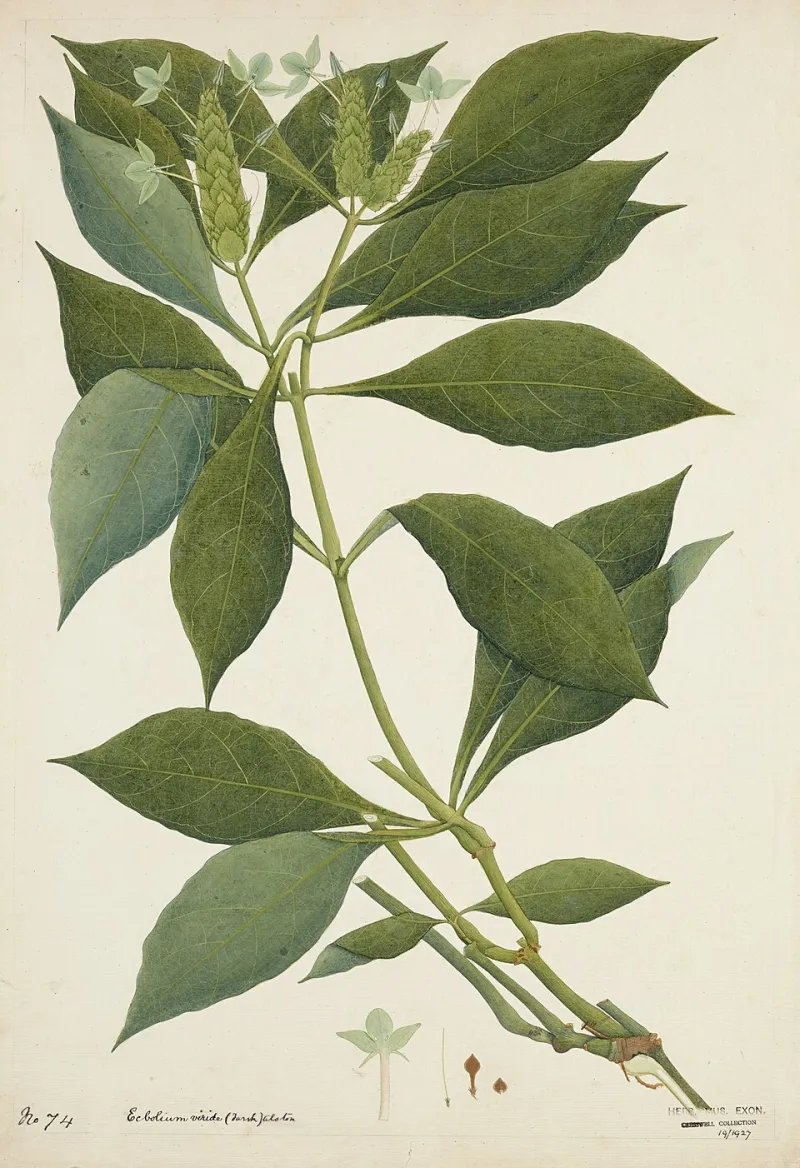
Photo: Unknown Indian artist, Public domain, via Wikimedia Commons
Menopause has moved firmly into the UK's health conversation. NICE guideline NG23 sets out the clinical pathway, HRT remains the first-line option for vasomotor symptoms where there is no contraindication, and yet a growing number of women are asking their pharmacist, their nutritionist and their search engine about plant-based adjuncts. Shatavari — Asparagus racemosus — sits near the top of that list, largely on the strength of its Ayurvedic reputation as a rasayana and, more colloquially, as the 'woman's herb'.
The reputation is old. The evidence is younger, and thinner than the marketing suggests. What follows is an attempt to hold both in view.
The traditional case, stated fairly
Classical Ayurvedic literature describes shatavari as cooling, nourishing and restorative, and it appears in formulations for a range of complaints rather than one narrow gynaecological purpose. It was also used traditionally as a galactagogue and as a general tonic for debility. None of this constitutes proof of effect in perimenopause; what it does is explain why the herb attracted research attention in the first place. Traditional use is a rationale for study, not a substitute for it.
What women are actually trying to solve
Perimenopause is not a single symptom. Hot flushes and night sweats, disrupted sleep, low mood, irritability, joint aches, brain fog and altered libido cluster differently in every woman, and the underlying hormonal picture shifts month to month. A supplement that helps sleep may do nothing for flushes, and a trial that measures only flush frequency will miss the thing that most disrupts a working week. Any honest appraisal has to start with the specific symptom being targeted.
The trial evidence: plausible, not proven
The published research on shatavari at menopause consists mainly of small randomised controlled trials, most conducted in India, typically lasting eight to twelve weeks with fewer than one hundred participants. Several report reductions in hot flush frequency and improvements in sleep quality relative to placebo; others find effects difficult to distinguish from placebo. A recurring weakness is that few trials have been independently replicated in a different population, and several use multi-herb formulations, which makes attribution impossible.
Narrative reviews of the field tend to reach the same conclusion: the safety profile looks reassuring, the signal is interesting, and the methodological quality is too limited to support strong claims. No large UK trial exists. It is also worth noting that shatavari is frequently described online as a phytoestrogen; the evidence that it meaningfully raises oestrogen in humans is weak, and the framing is often doing more marketing work than scientific work.
A reasonable summary: shatavari is a well-tolerated traditional herb with low-certainty evidence of modest benefit for some menopause symptoms. It is not a substitute for HRT where HRT is indicated, and it should not be presented as one.
Reading a label in a UK shop
Three details matter more than the front of the pack.
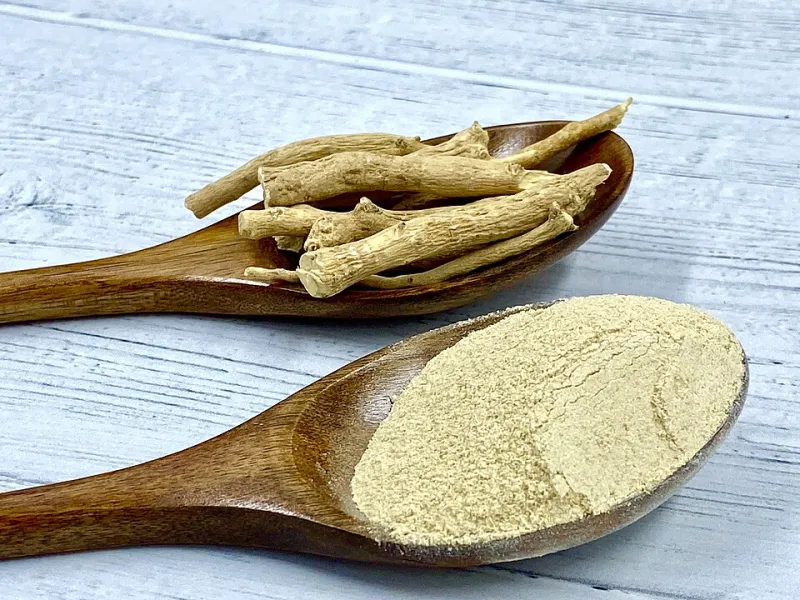
- Part of the plant and standardisation. Root extract is the usual form. A standardised extract will state a marker compound and a percentage — commonly saponins in the region of 20 per cent. Unstandardised root powders vary considerably from batch to batch.
- Licensing status. In the UK, herbal products carrying a Traditional Herbal Registration (THR) mark from the MHRA are licensed on the basis of traditional use, safety and quality — not on proof of efficacy in clinical trials. That is a meaningful quality signal, but it is not an efficacy claim.
- Simplicity. If you intend to assess whether the herb suits you, buy a single-ingredient product. Blends of five adaptogens make a personal trial uninterpretable.
Typical doses in the trial literature sit in the range of 250 to 500 mg of extract once or twice daily, or one to two grams of dried root as a decoction. Start at the lower end.
Safety and interactions worth raising with a clinician
Shatavari is generally well tolerated. Reported adverse effects are mild and mostly gastrointestinal — occasional loose stools, bloating, headache.
Theoretical concerns deserve a mention even where the evidence is thin, because the conversations are cheap and the reassurance is valuable:
- Diuretic effect. Animal data suggest a mild diuretic action, which raises the question of interaction with lithium and with prescribed diuretics.
- Blood glucose. Possible lowering effects mean that anyone on insulin or sulfonylureas should monitor readings rather than assume nothing has changed.
- Immunomodulation. Laboratory studies show immune-stimulating activity; anyone taking immunosuppressants after transplant should seek advice before use.
- Hormone-sensitive conditions. In the absence of long-term human data, women with a history of breast or uterine cancer, or with endometriosis, should discuss the herb with their oncology or gynaecology team rather than self-prescribe.
- Pregnancy and breastfeeding. Avoid medicinal doses without professional guidance.
There is no published interaction data for shatavari alongside HRT. Many clinicians advise stopping herbal supplements around two weeks before planned surgery; check with your team.
Building it into a daily ritual
Consistency matters more than timing, but the Vedic habit of anchoring an action to a moment in the day is genuinely useful for adherence. A workable pattern:
- Take the extract with breakfast, when the stomach is settled and the day has a fixed structure.
- Keep a simple diary for eight weeks: number of flushes per day, number of night wakings, and a one-to-five mood and energy score.
- Change nothing else in that window — no new supplements, no dramatic dietary overhaul — so the diary means something.
- Review at eight weeks. If there is no measurable change, stop. If there is, consider whether the improvement is worth the cost.
The bottom line
Shatavari has a long history, a plausible mechanism and a modest, low-certainty evidence base. It is not the answer to menopause, and it does not need to be. For some women it may be a tolerable adjunct alongside conventional care; for others it will be an expensive nothing. The Vedic tradition itself is unbothered by that outcome — it treats herbs as daily practice, not as cures.
This article is general information and not medical advice. Discuss any new supplement with your GP or pharmacist, particularly if you take prescription medication or have a history of hormone-sensitive illness.