Before the First Pour: Jala Neti, UK Water Safety and a Sensible 2026 Protocol
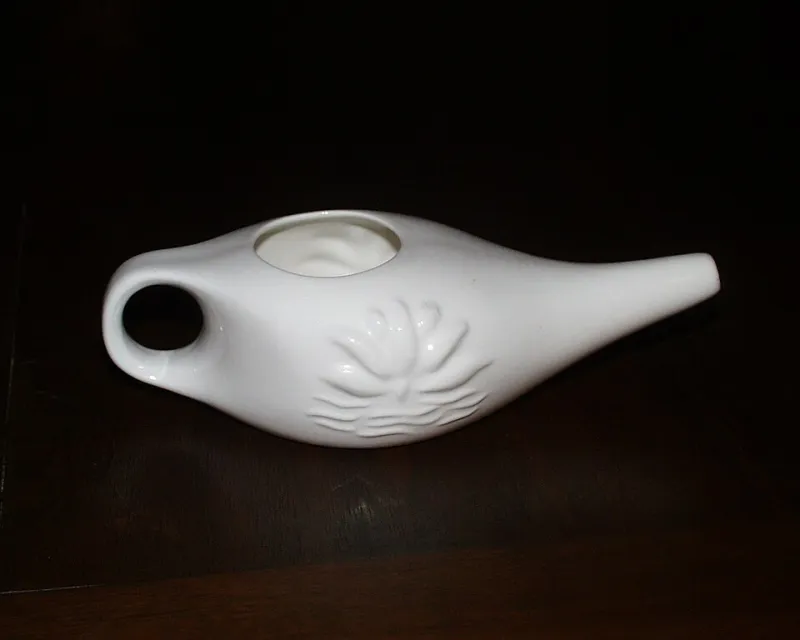
Photo: Unknown, CC BY-SA 3.0, via Wikimedia Commons
Jala neti has a simple appeal: a small pot, a warm saline rinse, and a few minutes of quiet attention. In the Vedic-inspired routines that inform much of this site, it sits alongside tongue scraping and oil pulling as a daily hygiene practice. But nasal irrigation is also a medical intervention, however gentle. In the UK, the practical question is not whether the ritual is traditional. It is whether the water is safe.
Why the UK tap matters
UK tap water is among the most closely regulated in the world, and it is safe to drink. It is not, however, sterile. Drinking water can contain low levels of micro-organisms and additives that are harmless in the gut but not intended for the nasal lining. Public health agencies in several countries have linked rare but severe infections to nasal rinsing with untreated tap water. The organism most often discussed is Naegleria fowleri, a free-living amoeba; UK cases are exceptionally rare, but the outcome can be catastrophic. That asymmetry — very low probability, very high harm — is why guidance is cautious.
Filtered water is not a solution. Domestic jug filters reduce chlorine and some metals, but they do not sterilise water. Bottled water is not guaranteed sterile either. The safe options are distilled water, sterile water, or water that has been boiled and cooled.
What the evidence supports
Nasal saline irrigation has a reasonable evidence base as an adjunct for allergic rhinitis and chronic rhinosinusitis symptoms. It can thin mucus, reduce crusting and improve the sensation of nasal clearance. It is not a cure for infection, a substitute for prescribed treatment, or a reason to delay medical assessment. The evidence is strongest for symptom relief alongside standard care, not for replacing it.
That distinction matters in a UK context, where seasonal allergic rhinitis and central-heating dryness can both make the nose feel congested. A saline rinse may help some readers feel more comfortable. It will not treat a bacterial sinus infection, and it should not be used to avoid seeing a clinician when symptoms are severe or persistent.
The water question: tap, filter, kettle, bottle
The safest domestic protocol is straightforward. Bring water to a rolling boil, then cool it to lukewarm. Use it within 24 hours, store it covered in a clean container, and discard any remainder. Alternatively, use distilled or sterile water purchased for medical use. Do not use hot water straight from the kettle, and do not add salt to water that has not been properly prepared.
A common mistake is to assume that a kettle that has just boiled is sufficient if the water is then left in the kettle overnight. The safer habit is to prepare a fresh batch, keep it covered, and clean the container. If you would not trust the water in a baby's bottle, do not put it into your nose.
Salt, temperature and technique
Use non-iodised salt without additives, or a pharmacy-prepared saline sachet made for nasal irrigation. A roughly isotonic solution is about 0.9% salt, but the exact recipe should follow the device instructions or a clinician's advice. Some readers use a slightly hypertonic rinse for thick mucus; that is a reasonable short-term option for some, but it can sting and is not a universal default.
Technique is equally important. Wash your hands, lean over a sink, tilt your head, and breathe through your mouth. Pour gently into one nostril and let the solution drain from the other. Do not force the flow. Blow your nose gently afterwards, and clean the pot with hot soapy water before air-drying it. Do not share pots.
When to leave the pot on the shelf
Skip nasal irrigation if you have an ear infection, recent nasal or sinus surgery, a history of frequent nosebleeds, or a perforated septum, unless a clinician has specifically advised otherwise. Readers who are immunocompromised should seek medical advice before starting. Children should only use nasal irrigation under adult supervision and with clinical guidance.
If you have fever, severe facial pain, swelling around the eyes, vision changes or symptoms that are worsening rather than settling, contact NHS 111 or your GP. Nasal irrigation is not the right first response to those signs.
A modest ritual, not a medical shortcut
In the Vedic frame, jala neti is a cleansing practice, not a cure-all. That is a useful boundary for 2026. Used with sterile or boiled-and-cooled water, a clean pot and realistic expectations, it can be a comfortable adjunct for some nasal symptoms. Used with untreated tap water, it introduces a risk that no ritual benefit justifies. The pot is secondary. The water comes first.