The Scale in the Cupboard: Dosing Vedic Churnas by Weight in 2026
The daily churna ritual has an appealing simplicity: a small spoon, a glass of water, a moment of attention. Yet in a UK kitchen, that small spoon is often the least controlled part of the routine. Teaspoons vary in shape and capacity, powders vary in density, and the difference between a level spoon and a heaped one can be substantial. For readers using Vedic-inspired powders, the practical question for 2026 is not whether the ritual is meaningful, but whether it is measurable.
A teaspoon measures volume, not mass
A teaspoon is conventionally associated with 5 millilitres of volume. That is a measure of space, not weight. A millilitre of water weighs about one gram, which is why kitchen conversions sometimes appear to work. A dry powder is not water. Its bulk density depends on particle size, milling, moisture content and how firmly it has settled in the packet.
Triphala, amla and ashwagandha illustrate the problem. A level teaspoon of one may hold roughly two grams; another may hold closer to four. A heaped spoon can push the figure higher still. Scooping from a narrow pouch can compact the powder; spooning from a wide jar can leave it loose. Add humidity from a boiling kettle and the same powder may clump, altering both volume and weight. In ordinary use, heaped versus level measures and varying scoop density can swing a dose by 30–50%, sometimes more.
That variability matters because supplement labels are written in masses, not moods. A label that specifies 3 g per serving is making a weight claim. A spoon cannot confirm it.
Read the label as a weight instruction
UK food supplements are regulated as food, not medicines, and labels should state the serving size and ingredients clearly. When a churna label gives a serving in grams, treat that as the instruction. When it gives a spoon measure, treat the spoon as shorthand that needs calibration in your own kitchen.
This is not a trivial distinction. If a label says one teaspoon and your teaspoon holds 30% more than the manufacturer assumed, the daily serving is not what the label intended. If it holds 30% less, the ritual may be underdosed. Neither outcome is desirable in a product used repeatedly.
Readers should also check whether the label refers to a level or heaped spoon. Many do not say. In the absence of a clear statement, weigh the amount that matches the labelled gram serving, then note the spoon equivalent for that specific product.
A five-minute audit with a 0.1 g scale
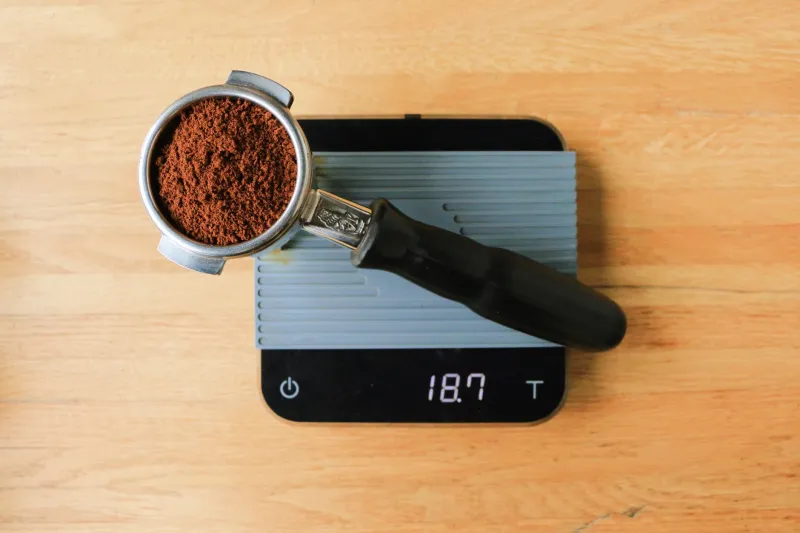
A digital kitchen scale with 0.1 g resolution is inexpensive and sufficient for this task. It need not be a laboratory instrument. It should, however, be stable, easy to tare and used on a flat surface away from draughts.
Begin with the empty vessel. Place a small bowl or the scoop itself on the scale and press tare. Spoon the powder loosely into the vessel, level the top with the back of a knife if using a spoon, and record the weight. Repeat with a heaped measure if the label uses that term. Do this two or three times to see the spread. The aim is not laboratory precision but a realistic picture of your own hand and your own spoon.
A simple calibration check is worth doing occasionally. A known calibration weight is ideal. If none is available, a sealed unopened packet of known net weight can provide a rough sanity check, though it is less exact. The point is to catch a failing scale, not to create a home laboratory.
Moisture is the quiet variable
Many Ayurvedic powders are hygroscopic: they attract moisture from the air. A kitchen is a humid place, especially in a British winter when kettles, cooking and drying laundry all add water vapour. Clumping changes how a spoon fills. A powder that pours freely in November may pack tightly by February.
Store churnas in airtight containers, away from steam and direct sunlight. Use a dry spoon. Do not leave the container open while the kettle boils. If a food-grade desiccant sachet is supplied, keep it in the container but out of direct contact with the powder. Refrigeration is usually unnecessary unless the label says otherwise, and it can introduce condensation each time the jar is removed.
Weighing is more reliable than tapping or shaking a clumped powder back into a familiar volume. If the powder has changed physically, the scale will show it.
Build a dosing card for the cupboard door
A small card inside the cupboard door can remove daily guesswork. For each product, record the product name, the labelled serving in grams, the weight of your level spoon in grams, the weight of a heaped spoon if relevant, the date opened and any storage note. A simple line such as “Triphala: label 3 g; level teaspoon = 2.4 g; use 1 level tsp plus a small top-up” is more useful than a vague memory.
This card should also carry a caution. Anyone who is pregnant, breastfeeding, taking prescribed medication or managing a medical condition should seek advice from a pharmacist, GP or registered dietitian before using concentrated herbal powders. Dosing by weight improves consistency; it does not establish suitability for a particular person.
What weighing does and does not solve
A scale cannot verify the quality of a product, the accuracy of its label or the absence of contaminants. Those are separate questions of sourcing, testing and regulation. Nor does weighing replace professional advice. What it does is remove one avoidable source of variation from a daily practice.
The Vedic cupboard is not a pharmacy, and the kitchen teaspoon is not a dispensing measure. In 2026, the more respectful approach to these powders is also the more ordinary one: read the label in grams, keep a small scale, store the powders well, and write down what your own spoon actually holds. Ancient wisdom may supply the ritual; modern evidence asks for a repeatable measure.